
How vendors see the future of airline technology
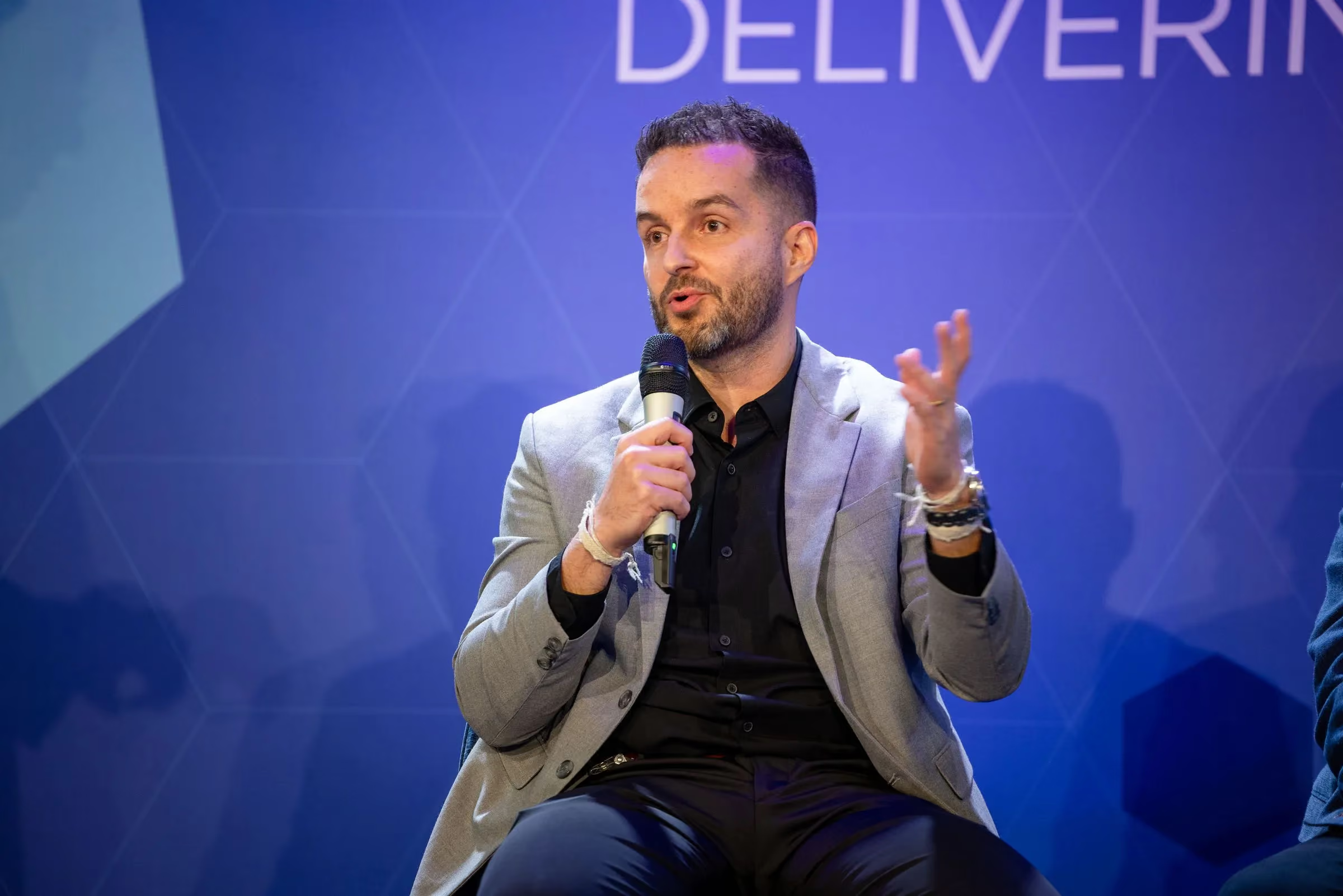
At T2RLEngage-2025, industry experts, including Victor Alzate (Ink Innovation), Alan Dunne (Datalex), Gianni Cataldo (Accelya), and Ghaleb Rostom (Amadeus), joined moderator Mark Lenahan to debate what modularity really means for airlines and how vendors can make it work in practice.
This debate took place during “Delivering modular OOSD – the vendor's view: from catalogue to delivery.” The discussion quickly zeroed in on the industry’s biggest tensions: modularity as a baseline expectation, integration that is still too costly, AI as a possible shortcut, standards that move too slowly, and openness as the surprising long-term strength.
Modularity: the baseline
All agreed that modularity has shifted from theory to necessity. Airlines want the flexibility to select the right component for each part of their business without being locked into one provider.
Victor Alzate was emphatic: modularity isn’t a choice anymore, it’s the only way forward. Alan Dunne framed it as business agility — the ability to move faster and compete. And Gianni Cataldo argued that openness also lowers barriers for new players, creating more competition and innovation across the ecosystem.
Integration: the pain everyone feels
Here, Ghaleb Rostom admitted the elephant in the room: integration works, but it’s expensive and messy. Airlines face hidden costs every time they connect new systems. Dunne and Cataldo agreed, noting that while NDC has created progress, different implementations mean true plug-and-play remains elusive.
The debate turned to whether the solution lies in faster standards or pragmatic workarounds. Some argued for “just build it now” and refine standards later, while others pushed for stronger discipline to avoid fragmentation.
AI: leapfrog or distraction?
Victor Alzate introduced a provocative idea: AI could bypass the integration treadmill altogether. By using intelligent agents to handle system-to-system communication, airlines could avoid rewriting code every time a schema changes.
This sparked pushback. Rostom warned that backend integration still needs solid APIs and reliability. Dunne suggested AI could be useful in cutting effort on testing and rule management, but not as a replacement for structured technical contracts.
Standards: foundation, but too slow
No one disputed that standards are needed, but frustration was clear. IATA’s pace was described as years behind where the industry needs to be. Cataldo summed up the pragmatic view: innovation can’t wait. Build working solutions, then bring the lessons back to standards bodies.
Openness as a strategy, not a threat
One of the more striking points came when incumbents reframed openness as a competitive advantage. Allowing airlines to integrate third-party modules builds loyalty, rather than eroding it. Rostom noted that no provider can be the best at everything, but enabling choice keeps customers engaged.
Top takeaways
The session revealed both impatience and optimism:
- Modularity is non-negotiable.
- Integration remains the hardest problem.
- AI could change the equation, but views differ on how far.
- Standards are vital, but lag innovation.
- Openness strengthens, not weakens, vendor relationships.
As Victor concluded, integration is the key. The future will be shaped by how boldly vendors simplify, cooperate, and harness new technologies to deliver on the modular vision.