
Modern Airline Retailing fundamentals. A series of short explainers on MAR — the terminology, the structure, and what changes when airlines move from PNRs to orders.
If you've spent any time in the airline technology space recently, you've probably encountered a wall of acronyms and walked away unsure whether they're all referring to the same thing or to four completely different things. The answer, frustratingly, is: kind of both.
Here's a quick map of the terrain.
NDC (New Distribution Capability) is specifically about distribution. It's a standard that defines how airlines distribute fares and inventory through global distribution systems. It modernises the channel between the airline and the travel agent, in broad strokes. That's the scope of NDC: how you get the product out there.
One Order is a separate standard with a different concern: what was sometimes called a Super PNR. The idea is to consolidate all booking information that might previously have been scattered across multiple PNRs into a single place, with a clean approach to revenue reconciliation. One Order is about the record of what's been sold and to whom.
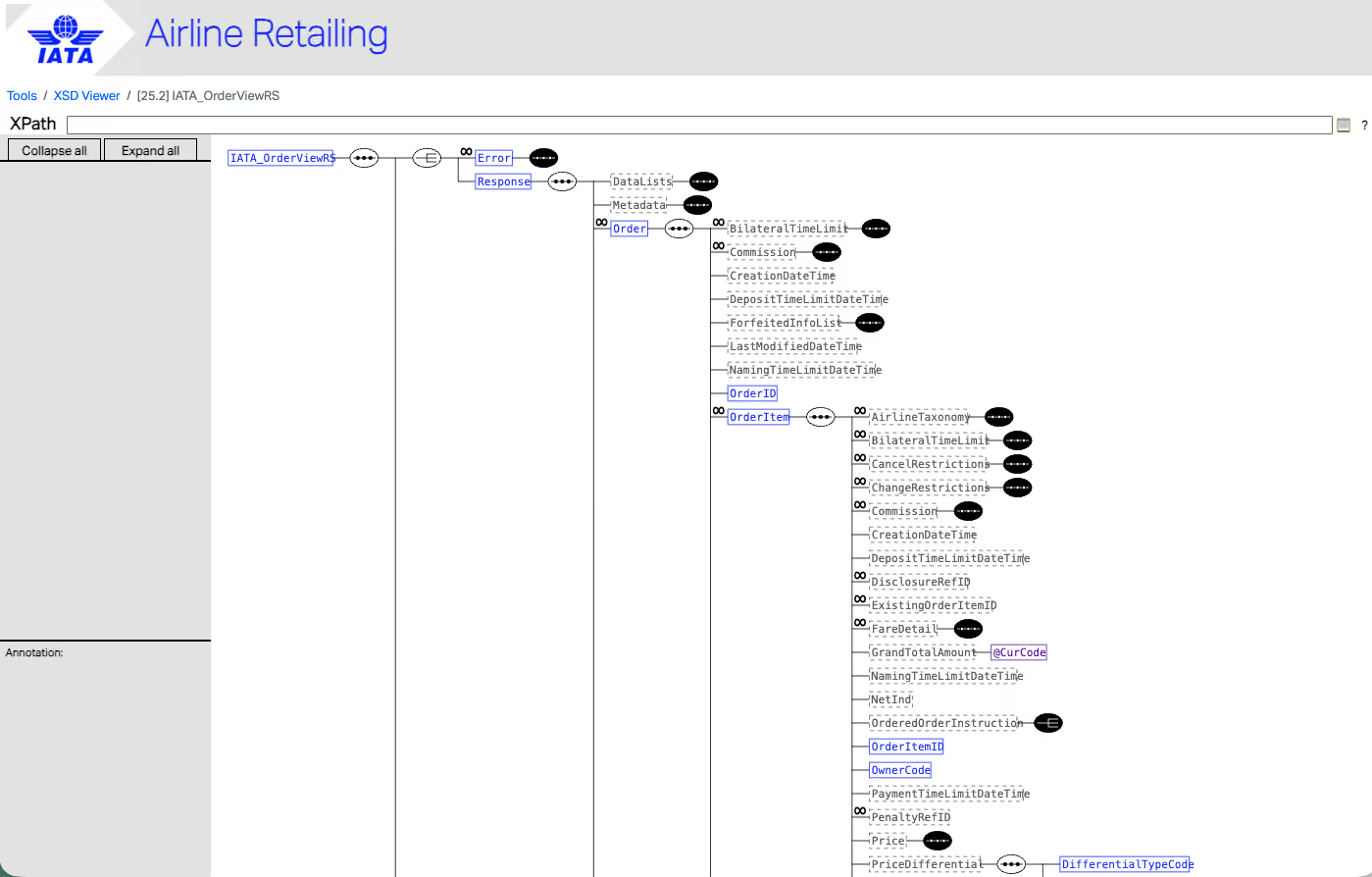
Those two standards — NDC and One Order — were eventually combined into a single schema. That schema comes with a reference architecture, and the whole package goes by a couple of names. MAR stands for Modern Airline Retailing. OOSD stands for Offer, Order, Settle, Deliver, and it also describes the workflow it enables: airlines make offers, customers place orders, settlement occurs, and the product is delivered.
Why does this matter?
Partly because when someone says "NDC", they might mean the distribution piece specifically, or they might be using it as a catch-all for the whole modern retailing stack. Knowing the distinctions means you can ask the right follow-up question.
For the purposes of this series, we're focused on the Deliver part of OOSD — what happens after the booking is made, when the airline has to actually provide what it sold.
Q: Is OOSD an IATA standard?
Yes. Both NDC and One Order are IATA standards, and the combined schema is maintained under the IATA umbrella. Working groups develop and evolve the standards over time, which is partly why terminology can be inconsistent: different working groups sometimes use the same terms differently.
