

Stop sinking millions into depreciating hardware. It’s time to unlock your liquidity. A perspective of managing terminal expansion shared by Edson Bezerra, Business Development, Ink Innovation
Many airports invest significant capital in Common Use hardware and infrastructure. While these investments are intended to support operational needs, they often result in large sums of money being tied up in assets that quickly lose value. This capital could otherwise be allocated to more strategic initiatives or future expansion opportunities.
Stop sinking millions into hardware that starts depreciating the day it’s installed.
Every dollar spent on hardware becomes less valuable over time, as technology ages and requires replacement or costly updates. By continuing to follow this model, airports risk limiting their financial flexibility and missing out on opportunities to adapt quickly to changing demands.
The flaw of CapEx lock-in
Airports often find themselves in a situation where substantial capital is devoted to Common Use hardware and technology infrastructure. These investments, while initially intended to address operational needs, tie up large sums of money in assets that begin to depreciate almost immediately. The value of this hardware declines as technology evolves, demanding updates or replacements well before the end of traditional depreciation cycles.
The challenge with this approach is that every dollar spent on hardware becomes less valuable over time. As airports continue to allocate funds to rigid infrastructure, they reduce their ability to adapt to new market demands or invest in strategic initiatives. This "lock-in" to capital expenditures limits financial flexibility and can hinder long-term growth opportunities.
In summary, CapEx lock-in means that airports are restricted by their initial investments, unable to pivot quickly or reallocate resources efficiently as needs change. This approach exposes organisations to unnecessary risk and prevents them from fully capitalising on evolving opportunities.
The heavy infrastructure trap
Airports are often required to spend millions of dollars on servers and local networks before even a single passenger checks in. This significant investment is made up front, at the expense of capital that could be used elsewhere. The equipment purchased is not only costly to maintain but also lacks flexibility. Once installed, these assets are difficult and expensive to scale down if needs change, further restricting operational agility. These infrastructure investments are tied to lengthy depreciation cycles, often seven years, while technology itself evolves much faster. This disconnect results in airports being stuck with outdated systems long before their full financial value is realised.
You aren't buying infrastructure; you're buying technical debt.
The financial reframe
In today's unpredictable market, maintaining liquidity is your best asset. Rather than owning the underlying infrastructure of your airport's technology, consider subscribing to its performance. This approach allows you to stay agile and responsive to change, without being weighed down by depreciating equipment and outdated systems. Transitioning Common Use systems from a heavy CapEx model to an agile OpEx approach enables airports to manage resources more effectively and adapt quickly to market shifts.
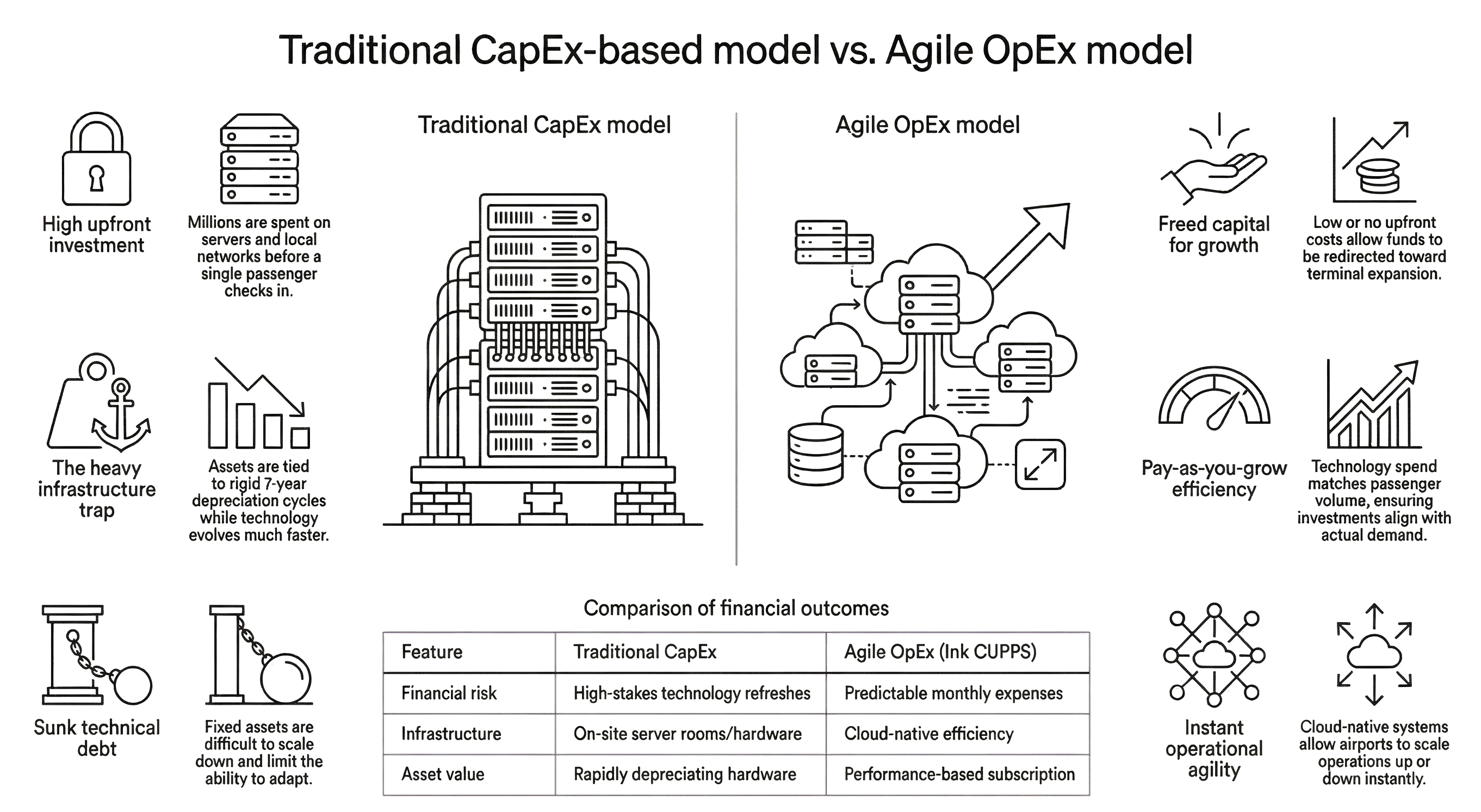
The CUPPS value by Ink Innovation
- Low/No upfront investment: preserve your capital for terminal expansion and enhancing the passenger experience.
- Cloud-native efficiency: eliminate the need for costly on-site server rooms and bulky hardware.
- Pay-as-you-Grow: Match your technology spend directly with passenger volume, ensuring your investments align with actual demand.
Modernise your terminal without the shock of large capital expenditures.
Own economics, not hardware. Ink CUPPS gives you control to:
1. Reduce risk: eliminate the need for massive, high-stakes technology refreshes.
2. Increase agility: instantly scale operations up for peak times and down for quieter periods.
3. Optimise the balance sheet: free up cash flow to redirect investment focus on what truly matters.

Author