



Victor Alzate, Chief Product Officer at Ink Innovation, shares his perspective on navigating the future of airport experiences, the "Ready to Fly" revolution.
Beyond the paper boarding pass
For decades, airports have operated through a series of transactions, requiring paper documents, rigid queues, and static desks. This legacy approach treats travellers as numbers rather than individuals. Today, we are seeing a fundamental shift from traditional check-in to IATA's "Ready to Fly"1 concept, which reimagines travel by dissolving traditional touchpoints into an ambient experience.
In this new vision, the airport becomes a responsive environment. Instead of moving from one bottleneck to the next, the traveller experiences a journey that flows invisibly in the background. The goal is to restore dignity and flow to the passenger, replacing the anxiety of "forgetting a document" with the confidence of being recognised by the system.
The great shift: from transactional to ambient
The engine driving this effortless movement from the curb to the gate is a concept known as the "Digital Twin."
The invisible traveller: understanding your Digital Twin
To make travel flow without stopping, the industry seeks to utilise a Digital Twin. Think of this as a "Spotify Wrapped" for your travel life, a comprehensive, real-time data representation of you that includes flight details, preferences, and visa status.
Unlike traditional databases that activate only when you scan a ticket, your Digital Twin starts working at the time of purchase. Well before you arrive at the airport, it verifies visa requirements and secures travel authorisations through global systems.
We are moving into the era of Agentic AI. While standard AI might just suggest a flight, an "agentic" system has the power to act on your behalf, autonomously negotiating a connection or rebooking a flight during a delay without you ever having to stand in a line.
The Digital Twin provides three primary human-centric benefits:
- Identity Verification: It confirms you are "Ready to Fly" across all stakeholders (airlines, security, and customs) without repeated, stressful document checks.
- Easy Handoffs: As you travel from home to the terminal, your Digital Twin updates the airport on your progress, ensuring the environment is prepared for your arrival.
- Personalised Journey Orchestration: The journey adapts to your needs, from gate changes communicated in your language to proactively securing preferred meals.
Once this digital foundation is established, the physical airport environment responds to each passenger’s presence.
Biometrics: your face is your universal token
The most visible part of this revolution is the replacement of paper with Biometrics. Instead of fumbling for a passport at every gate, your face becomes your "universal token." According to IATA research2, 73% of travellers prefer this biometric processing over manual checks because it removes physical handling.
In an ambient environment, the airport recognises you as you move through it. As an example, Changi Airport aims for 95% biometric processing by 20263. Additionally, its app uses AI to calculate walking times based on real-time crowd congestion, so passengers can better manage their time before boarding.
Biometric identity not only streamlines gate access but also transforms the most stressful aspect of travel: security.
Frictionless security and intelligent sorting
Security lines have long been a major source of travel friction. The "Ready to Fly" era addresses this with continuous verification corridors. Airports such as Frankfurt4 now use AI-powered scanners that allow passengers to walk through at a normal pace without removing belts, shoes.
The same intelligence applies to your baggage. Frankfurt Airport utilises the LuRAI computer vision system5, which has eliminated 95% of baggage misalignments since its implementation.
Traditional paper tags are being replaced by permanent e-ink devices. Your Digital Twin sends routing information directly to your bag tag upon booking. This enables AI systems to route luggage intelligently and reroute it instantly if your connection changes.
This approach shifts security from a one-size-fits-all bottleneck to a risk-based, nearly invisible process. By removing these physical stressors, we enable a stronger focus on human connection during travel.
Frictionless security enables airport staff to leave their stations and serve as true hosts.
Humanising the machine: why technology makes travel more personal
It is a common misconception that increased technology reduces human involvement. In reality, automation is intended to free staff from the confines of the check-in desk.
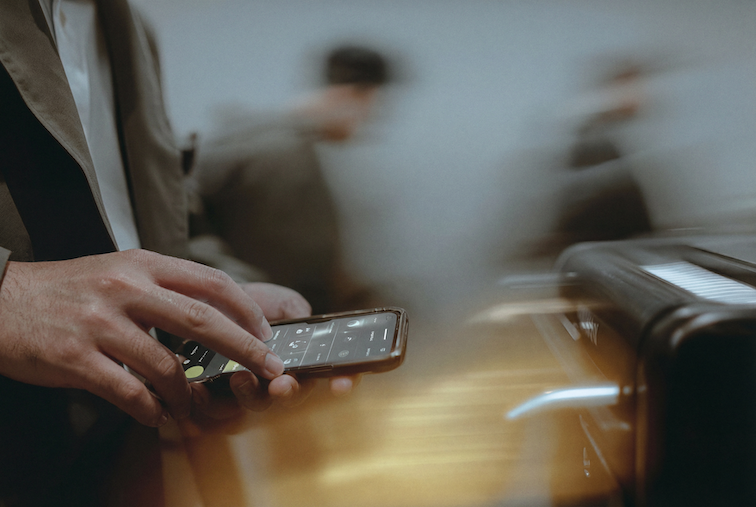
Ink Innovation has equipped several airlines and their ground crews with mobile tools. Agents now move throughout the terminal, printing boarding passes and bag tags, checking in passengers, and boarding travellers across 111 airports6. A mobile passenger handling application enables operations even in airports without fixed infrastructure. For example, BermudAir launched at LaGuardia using Ink Touch for fully mobile passenger handling. Agents use handheld devices and portable printers to complete check-in, document checks, bag tagging, and boarding without relying on traditional desks or self-check-in kiosks.
Another example, at Aeroporti di Roma (ADR), AI assistants like the WhatsApp-based assistant provide empathetic, contextual support7.
Three most transformational shifts for humans:
- Conversation-based vs. Queue-based: Staff approach passengers directly, using mobile tools to resolve issues through interaction rather than routine processing.
- Preemptive problem solving: Through proactive resolution, systems identify delays and send vouchers or rebooking options to your phone before you are aware of an issue.
- Universal accessibility: AI removes language barriers. Imagine a Mandarin-speaking passenger landing in a foreign hub with a tight connection; an AI-powered avatar recognises their Digital Twin and immediately provides gate-path guidance and rebooking options in Mandarin, restoring their agency in an unfamiliar place.
As we look toward 2026 and beyond, these systems will continue to evolve from mere tools into proactive travel companions.
The technology is the easy part
The "Ready to Fly" movement aims to make the complexities of global travel flow invisibly. By utilising Digital Twins, biometrics, and Agentic AI, the industry is shifting its focus from managing machines to caring for people.
However, the technology is the easy part. The 2026 AI & Data Leadership Benchmark Survey by Randy Bean8 highlights that 93.2% of the challenges in this transformation are actually human and cultural, not technological. The success of this revolution depends on our ability to embrace new ways of working and interacting.
Resources
- IATA – One ID Programme
- IATA – 2025 Global Passenger Survey
- Immigration & Checkpoints Authority (ICA) – Redefining Border Clearance and Service Delivery
- Airport Technology – Frankfurt Airport: AI-powered security scanners
- Business Focus Magazine – Fraport AG: Setting Standards Worldwide
- Ink Innovation – Ink Touch: Mobile Passenger Handling
- Passenger Terminal Today – Aeroporti di Roma rolls out AI assistant to elevate the passenger experience
- Randy Bean – 2026 AI & Data Leadership Executive Benchmark Survey

Author

